Lab 16 – Threat Hunting Validation & Attack Simulation
Simulate attacker behavior to validate your hunting queries, dashboards, and playbooks against real‑world patterns.
Objective Lab goal
This lab validates your threat‑hunting workflows by simulating attacker behavior across authentication, network, and system layers. You’ll run controlled attacks, test your hunting queries, and refine your playbooks.
- Outcome 1: Simulated attacker behavior executed safely.
- Outcome 2: Hunting queries validated across multiple log sources.
- Outcome 3: Dashboards and playbooks tested for accuracy.
- Outcome 4: Gaps identified and improvements documented.
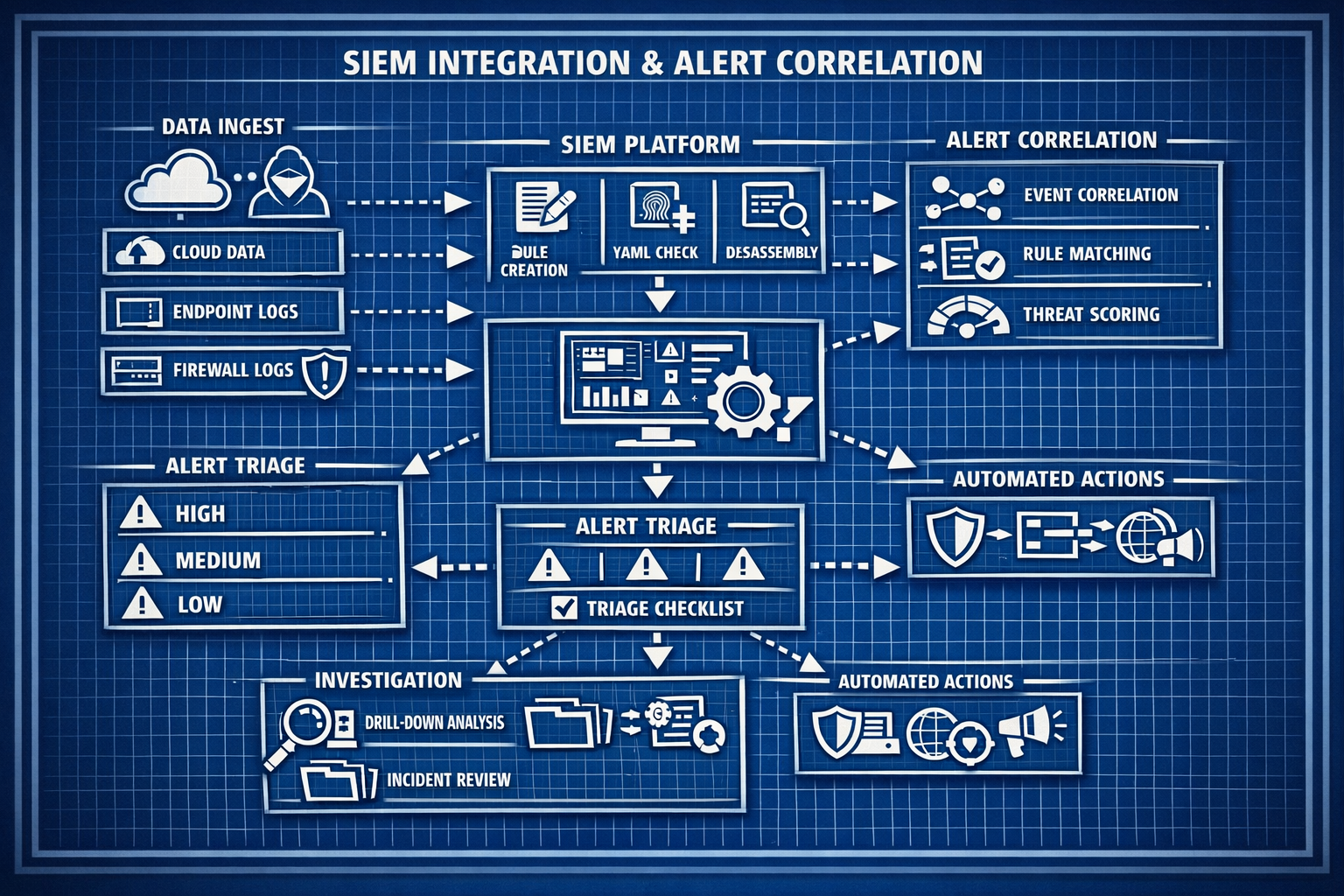
Lab 16: Simulating attacker behavior to validate hunting queries and playbooks.
Deliverables End‑of‑lab checklist
- DL16.1: Simulated attacker behaviors executed.
- DL16.2: Hunting queries validated.
- DL16.3: Dashboards and playbooks tested.
- DL16.4: Detection gaps documented.
- DL16.5: Month 4 final report completed.
Lab Steps Step‑by‑step instructions
Step 1 – Simulate Authentication‑Based Attacks
~45 minutes- From WIN10‑LAB, simulate:
- Failed logon bursts
- Password‑spray attempts
- Unusual logon hours
- Validate hunting queries for:
- Failed logon spikes
- Unusual user behavior
- Repeated authentication failures
Step 2 – Simulate Network‑Based Attacks
~60 minutes- Run controlled scans:
nmap -sS 10.10.10.1
nmap -A 10.10.10.1
- Trigger suspicious DNS queries.
- Validate hunting queries for:
- Port scans
- DNS anomalies
- High‑volume connections
Step 3 – Simulate System‑Level Attacker Behavior
~45 minutes- Simulate:
- Suspicious PowerShell commands
- Unauthorized service creation
- Privilege escalation attempts
- Validate hunting queries for:
- Process anomalies
- Service modifications
- Privilege escalation patterns
Step 4 – Validate Dashboards & Playbooks
~45 minutes- Review dashboards for:
- Authentication anomalies
- Network spikes
- System‑level alerts
- Run playbooks for:
- Brute‑force attacks
- Suspicious DNS activity
- Lateral movement
- Document detection gaps and improvements.
Reflection What you should understand now
- Validation: How simulated attacks confirm your hunting logic works.
- Correlation: How multi‑layer logs reveal attacker behavior.
- Improvement: How detection gaps guide future tuning.
With this lab, you’ve completed Month 4 and validated your proactive detection capabilities. In Month 5, you’ll move into endpoint security and EDR tooling.